- May 3, 2026
“Agile Inspired Digital Evolution Coaching” (A.I.D.E.): another cryptic slogan, some might think.
For me, however, it represents the synthesis of my history, my philosophy and my vision of coaching and the relationships between people and people with organizations. But let’s take a few steps back!
First of all, I state that when I talk about “Agile” (or rather the Lean-Agile movement, because as we will see the two are closely linked) I do not mean the various frameworks or methodologies that have been born over the years to put the principles of Agile into practice. In some of these frameworks I am certified as well: they are interesting and sometimes complicated, but they are technicalities.
And like all technicalities, sometimes they work well and sometimes not so well. Instead, I am referring to the basic principles of the Agile movement because, as one of the founders of the movement, Jim Highsmith, has repeated several times, “Agility is principally about mindset, not practices”[1].
If I had to summarize the fundamental principles of the Lean-Agile movement, which for me have been and are a beacon (in some cases even before meeting Agile), I would summarize them as follows:
“Servant leadership”, as the Americans say. It could be translated as: “Leadership at the service of the team”. I don’t believe in a leadership that hierarchically directs and controls people’s activities, but in a leadership that knows how to create the conditions for people and teams to flourish, remove obstacles, indicate a vision (because the Leader must not escape this) but building the path together. The leader must cultivate an environment of trust and security in which people and teams can express themselves at their best.
Value for the customer comes before adherence to a plan. This has many implications… including that plans must adapt to reality and not reality to plans. Not that plans are not important: as an engineer, I am a born planner. But the goal must be clear: it is not to follow the plan, but to look for value. For people, for teams, for organizations. The theme of value was born in the Lean movement and pervades the entire Agile culture.
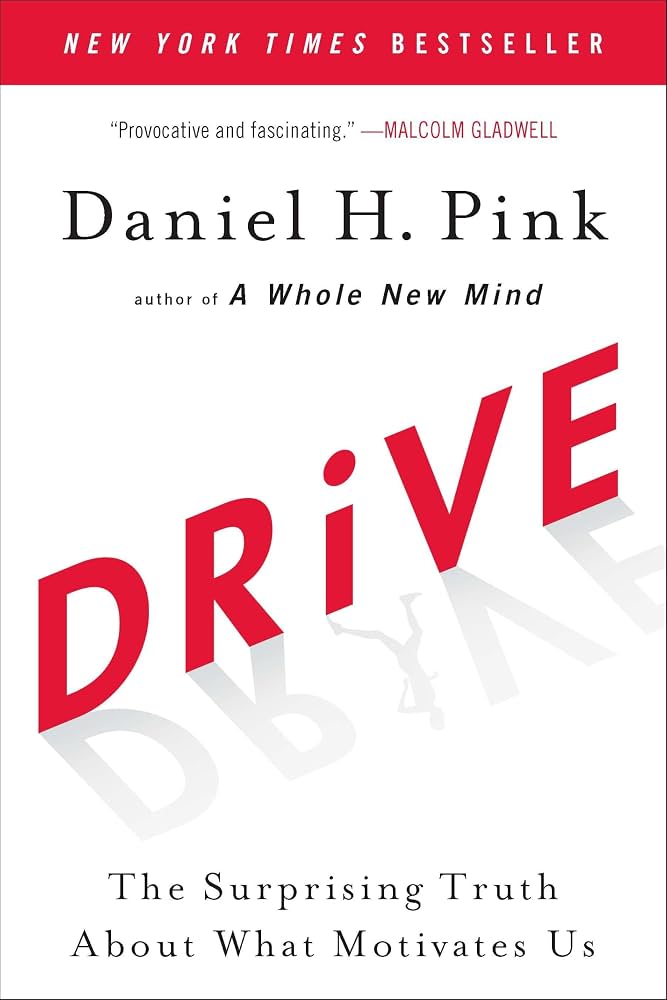
Intrinsic motivation: nell’agile, in agile, the theme of intrinsic motivation of all team members is fundamental. If you want to know more about the three motivational levers (Mastery, Autonomy, Purpose), I suggest this wonderful book by D. Pink.
Continuous feedback: this is also one of the cornerstones of Lean and Agile. It is the constant obsession with collecting feedback from users, the environment, colleagues and systematically incorporating it into the process of change or construction of a product. Those who embody these principles ask continuous questions to reality and use the answers to adapt to it and make it evolve. It is active and continuous listening to the context in which we operate, which allows us to grasp even the slightest nuances and respond to them in a coherent way.
Collaboration is more important than hierarchy: instead of rigid chains of command, integrated teams both internally and with other teams. And there is no hierarchy that holds in the pursuit of value: the emblematic example is the Andon cord 2 , that rope present in Toyota plants where even the last of the workers could block an entire production plant, if he saw a quality problem. “Self-organizing teams” are one of the manifestations of this principle.
Creating a culture of continuous learning. This is one of the mantras of Lean and one of the principles behind the obsession with feedback from the Agile movement. I have always believed that when we stop learning we stop living. Curiosity, the desire to explore and learn are cornerstones of the Lean-Agile culture in which I find myself 110%.
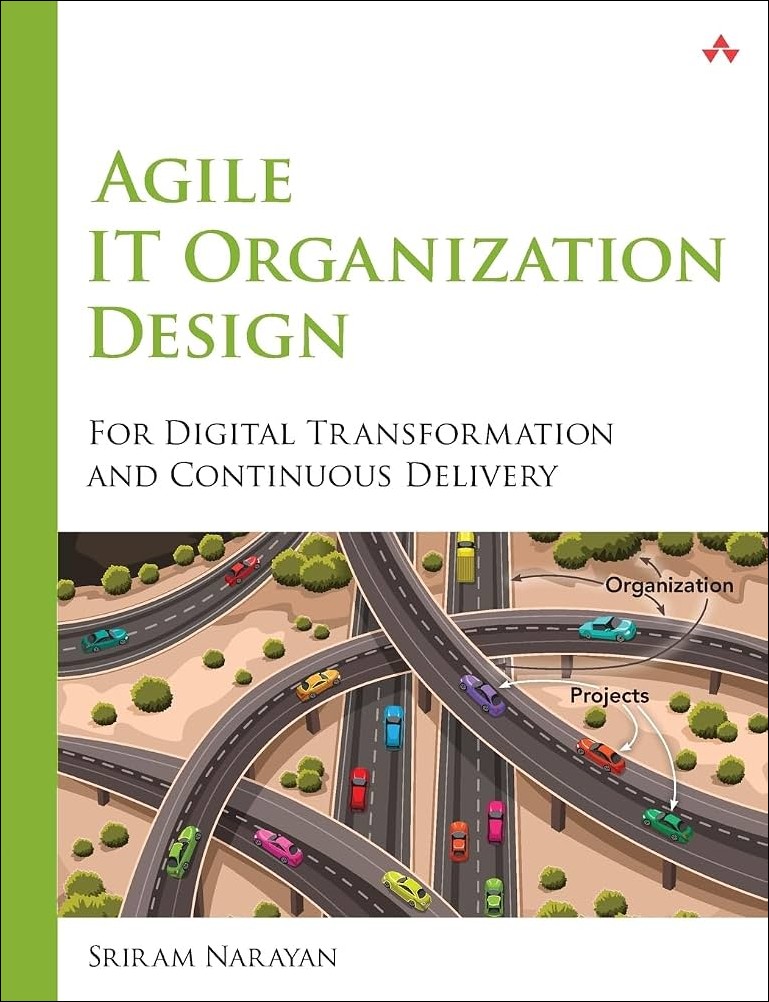
Another interesting book to understand how Agile can shape organizations is this one.
If we compare the above with ICF’s “core competencies” we find important points of contact. In particular (but not only):
COMPETENCE 2 (COACHING MINDSET): Develops and maintains an open, curious, flexible and client-centered mindset, engaging in continuous learning.
COMPETENCE 3 (TRUST AND SECURITY): Cultivate trust and security: Create a safe and supportive space that allows the client to express themselves freely and without fear.
COMPETENCE 6 (LISTENING): Considers the client’s context, identity, environment, experiences, values, and beliefs to improve understanding of what the client is communicating.
COMPETENCE 8 (GROWTH): Facilitates customer growth: Collaborates with the customer to transform insights and awareness into concrete, sustainable and responsible actions.
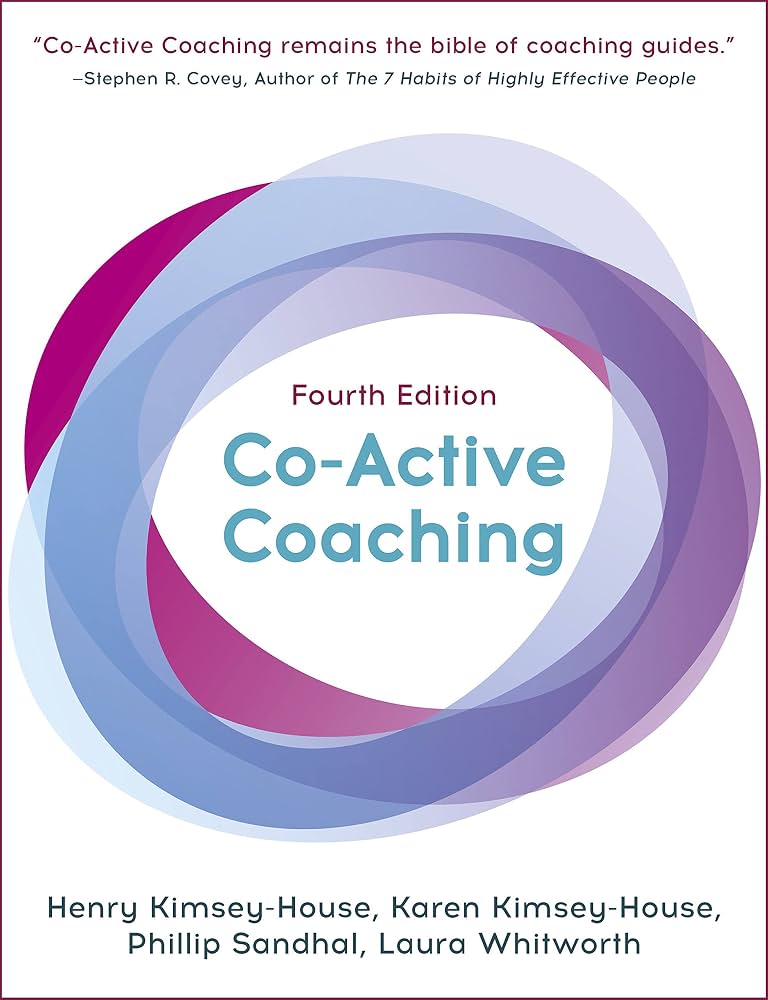
That there are significant points of contact is undeniable and also easily explained. In philosophy, there have always been two currents of thought and two visions of the world: what is called "anthropological optimism" (to name a few authors: Rousseau, Kant, the Enlightenment in general) and what is called “anthropological pessimism” (Nietzsche, Schopenhauer, Hobbes, Freud…). Here, both the Lean-Agile movement and coaching are definitely in the field of anthropological optimism. It is the difference between a “fixed mindset” e un “growth mindset”[3]. To use an expression of a framework that I love very much (and which is compatible with ICF), that of Co-Active coaching, man is "naturally creative, resourceful, and whole”[4]. If you want to learn more about the world of co-active coaching, with its metaphor of dance, its enlightening pages on the fundamental role of the coach’s intuition, curiosity and its focus (it is the center of the model) on “fulfillment, balance and process” for the client, I recommend this text:
A curiosity: how did the Lean movement (born in Japan in the post-war years) and the Agile movement (which was born in 2001 in a resort in the mountains of Utah) intertwine?
At the intersection of the two movements there are two spouses, Mary and Tom Poppendieck. Mary worked in a factory that applied Lean principles, her husband Tom was a developer… and both were active in the Agile movement, helping to shape some of its principles and changing the digital world and beyond 5 . A good example of couple fecundity (or the value of diversity).
I think it is now clearer why I inserted the term "Agile Inspired" in A.I.D.E. I would like to emphasize, to avoid misunderstandings, that I am still a coach who follows the ICF method, not an Agile Coach[2] (which is something else entirely).
Only the last two letters of A.I.D.E., or Digital Evolution, remain to be briefly explained. My professional biography is completely embedded in the digital evolution of the last 30 years. This is my background and this is my experience. For this reason, as a coach, I make myself available in particular to people and organizations that must deal with digital evolution (both traditional and guided by Artificial Intelligence) on a daily basis.
Not as a mentor, again a completely different role, but as a coach. In short, don’t expect advice from me on how to complete a digital transformation project or how to create an IT Governance model. I could do it, but it’s not the role of the coach (although the G.and.A.L.F[3] method could give you some ideas).
However, I firmly believe, and here I hook on the aforementioned Co-active coaching, that knowledge of the context (if well governed, avoiding confusion with mentoring) is fruitful in generating insights that I use in coaching. In addition, the long acquaintance with the digital world allows me to grasp shades of color indistinguishable to the layman, to ask the right questions to facilitate not only the
achievement of a goal, but the growth of the client as a whole person.
And sometimes, always asking permission, I share some intuition or experience. Maybe at the end of the session, so as not to affect the client’s flow of thought. And it seems to me to be welcome.
Finally, I conclude by saying that I have also provided coaching sessions for people who had almost nothing to do with digital (completely zero is impossible!) and it was a wonderful experience. Maybe the long acquaintance with such an entropic world as that of digital evolution provides me with some tools that can be applied more generally?
I don’t know, but if you want you can put me to the test…
[1] “Agility is primarily a mindset, not a set of practices”
[2] https://en.wikipedia.org/wiki/Andon_(manufacturing
[3] https://framework.scaledagile.com/lean-agile-mindset
[4] For more info on Co-active coaching: https://coactive.com/what-is-co-active/)
[5] https://martinfowler.com/bliki/AgileVersusLean.html
[6] Agile and ICF Coaching – A Perfect Marriage? | Coach Advancement by Tracy Sinclair
[7] https://www.yottabronto.net/e-se-provassimo-a-cambiare-approccio-nella-governance-della-trasformazione-digitale-il-metodo-g-and-a-l-f/